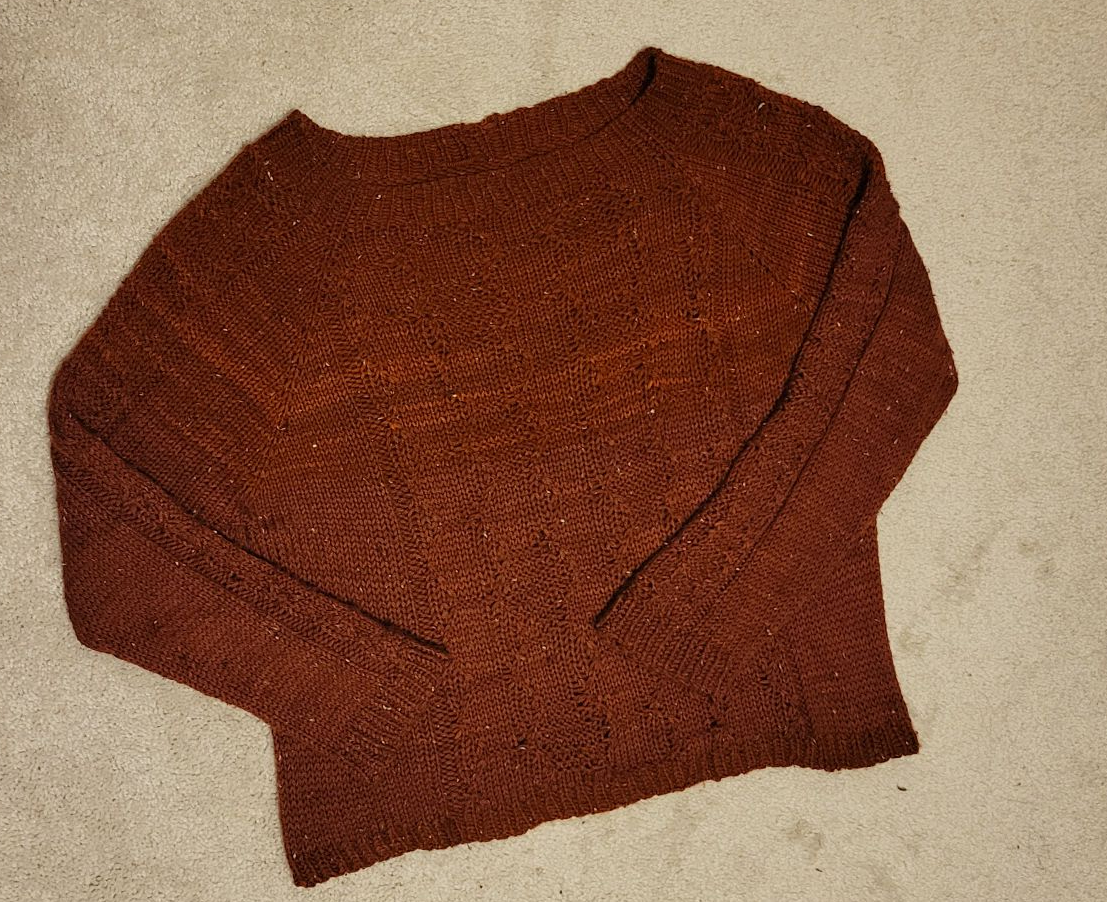
I think I just made the most autumnal sweater of all time (just in time for autumn to end).
I had been browsing Ravelry on the way to Knit City Calgary this past summer. I wanted to pick a pattern for which to buy yarn at the event. Ravelry is the main online database for knitting patterns, and I use its Advanced Search feature almost exclusively when I’m looking for my next project.
I wanted to make a pullover sweater in a single colour, with yarn no thinner than DK weight, raglan shaping, and knit top-down in-the-round. I plugged my parameters into the filters and scrolled along. I found myself drawn to patterns with textured stitches, particularly honeycomb motifs.
That’s when I saw Annie Lupton’s Honey Folk pattern, a beautiful design that featured right and left-twist stitches forming hexagons along the front, back, and sleeves, with stockinette separating the sections.
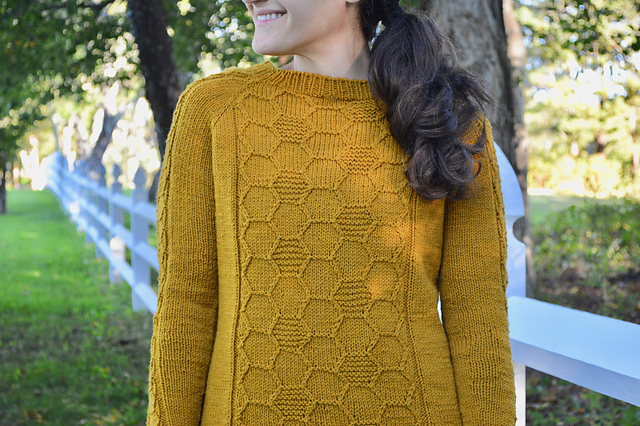
It was perfect. I wanted something that would be less monotonous than plain stockinette, but that wasn’t going to completely break my brain like the Jenny Sweater I made last year.
With the perfect pattern in mind, I sought out the perfect yarn to go with it. I opted for a rust or burnt-orange colour. Something I didn’t have already in my knitwear collection, despite being among my favourite colours right now (after red, of course).
Fortunately, rust was a super popular yarn colour among the vendors at Knit City as well! I was truly spoiled for choice, and after pacing the booths for a while, I chose a delightful tweed yarn from Bramble Ridge — a yarn dyer based in Mission, BC. Her “Redwood” colourway was the perfect cozy vibe I was looking for.

The nature of hand-dyed yarn is that it’s unpredictable, and each yarn can vary slightly between dyes. As such, I couldn’t tell that half of my yarns were ever-so-slightly different until I got home. Even so, I can only tell in certain lighting and scrutiny, so I got over it pretty quickly.
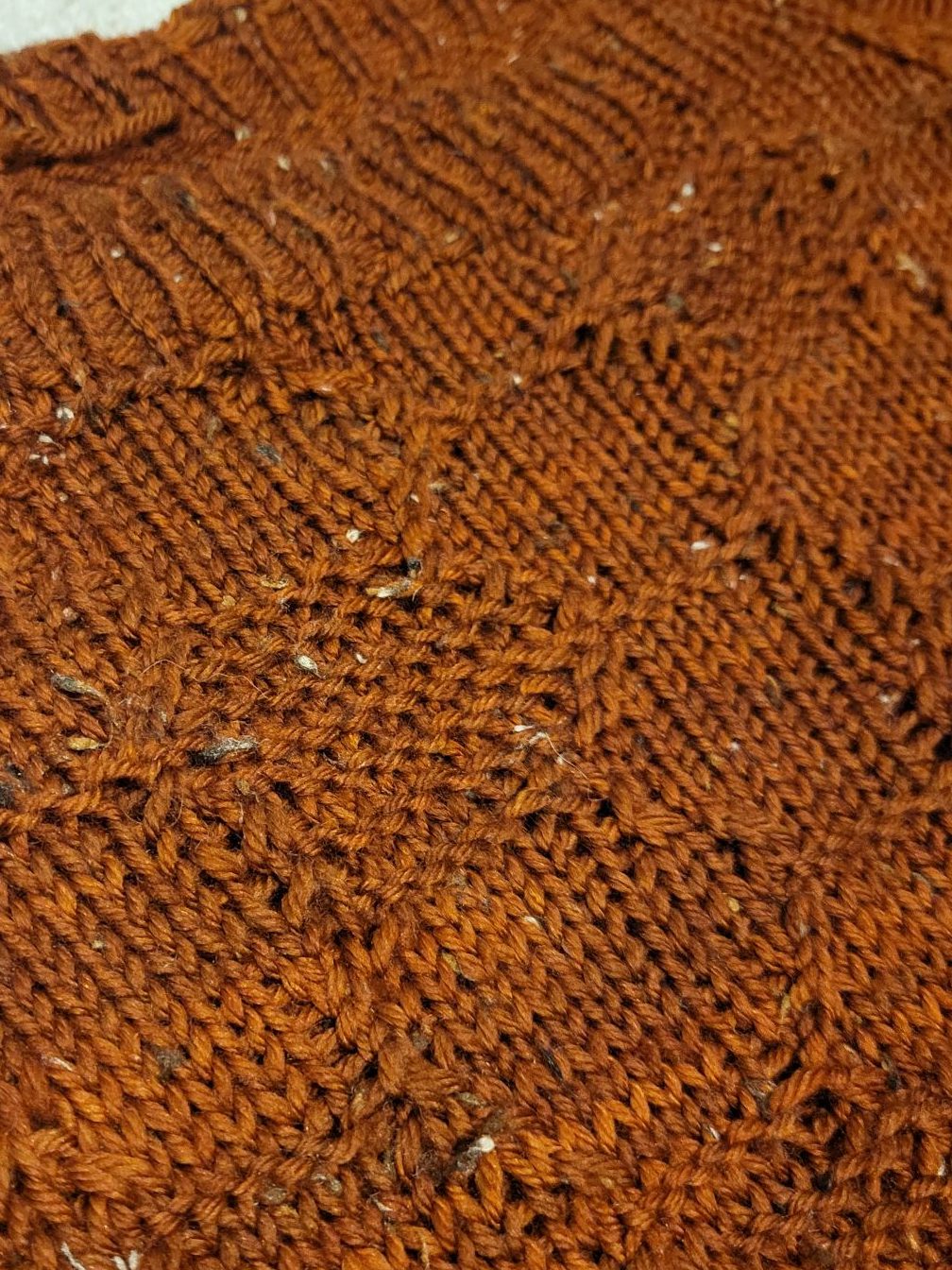
The honeycomb design was written in a series of charts for each section. Knitting charts are grid patterns that visually demonstrate the stitches or colourwork needed for each row of a project, rather than written instructions.
At first, I printed out the charts and crossed off each row as I finished to keep track of my place. This proved ineffective when I got past the raglan increases and started the body, which would repeat the chart over and over. I tried using pencil on the charts and erasing my marks to start over, but that wasn’t helpful. A pencil line would always be a little visible regardless of how hard I took the eraser to it.
Instead, I pivoted to online tools. Stitch Fiddle is a free chart-maker for all kinds of crafts. I transposed the charts into the program and used the built-in progress tracker to great advantage. I would have two windows open side-by-side on my laptop screen, with the chart on one side, and entertainment on the other.

For a long time, I would work exclusively on the body of a sweater before I would tackle the sleeves. I was a regular visitor to Sleeve Island. Lately, however, I have been using sleeve-knitting as a brain-break from knitting the body. This little shakeup of my routine also lent some novelty, making my progress feel more substantial even though I was knitting the same amount — just in a different order.
I am so happy with how the finished sweater looks, and am sure to have it in regular rotation for many years to come.

That sweater is great! Annnnnddd I’m off to look at the pattern on Ravelry!
Super cute. It looks fantastic. I used to enjoy Annie’s podcasts but she didn’t podcast very long.