The 1950s were defined by domesticity and a fascination with technology of the future. Powdered gelatin, electric washing machines, and for the purposes of my blog series, plastic yarn.
Although synthetic fibres had existed long before this time period — such as imitation silk in the 1800s and nylon in the 1930s — the postwar decade saw a boom of acrylic yarn for home and commercial use.
Acrylic was touted as an alternative to wool that was cheaper and easier to care for. Supply chain issues also plagued the wool industry in the 1950s (between global wool shortages and surging trade prices during the Korean War) so the new and exciting possibilities of plastic fibres were further amplified.
Synthetics factories began opening across Canada, turning plastic pellets into yarn and more. First, the plastic pellets are melted down into a thick solution, which is then forced through an extruder to form fibrous strands. These strands are stretched and treated before being spun and plied into finished yarn.

In 1952, David Hay founded the Spinrite textile plant in Listowel, Ontario. The operation still exists today under the Yarnspirations umbrella, and produces nearly every big-box yarn brand from Bernat to Patons, all of which are some form of synthetic material or blend (with the odd cotton thrown in for good measure). Throw a rock in Michaels and you’ll hit a Spinrite yarn.
This installment of the historical knitting series has given me the most trouble by far. At first, I chose a pattern for a glittering button-up blouse from a spring/summer 1955 pattern booklet I found at the Old Strathcona Antique Mall from Coats & Clark’s — yet another Spinrite brand.

The pattern used what is equivalent to today’s Bernat Premium Sparkle yarn — a black worsted-weight acrylic with metallic gold thread woven through it. Shopping for yarn at Wal-mart does not have the same romantic appeal that local yarn stores do for me, but since this is the first pattern where the yarn itself still exists, I wanted to maintain some historical accuracy.
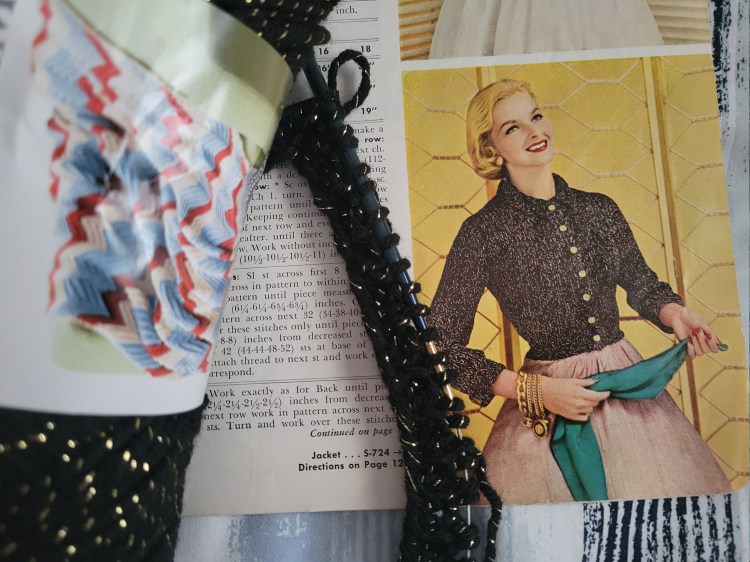
In hindsight, I should have read the pattern closer first instead of choosing solely from the photos. I didn’t realize until I’d already bought all the yarn and cast on the project that the pattern was 1) knit flat in several pieces, and 2) ribbed throughout. This effectively killed my motivation.
Ribbing takes a soul-suckingly long time when you knit right-handed like I do — even if it’s a thicker gauge like worsted. Since I would have to separately knit a back panel, two front panels, two sleeves, collar, button bands, and waistband, the project soon became a lot more daunting than fun. Even when I tried to power through, it took several months to get 75% through the back piece alone.

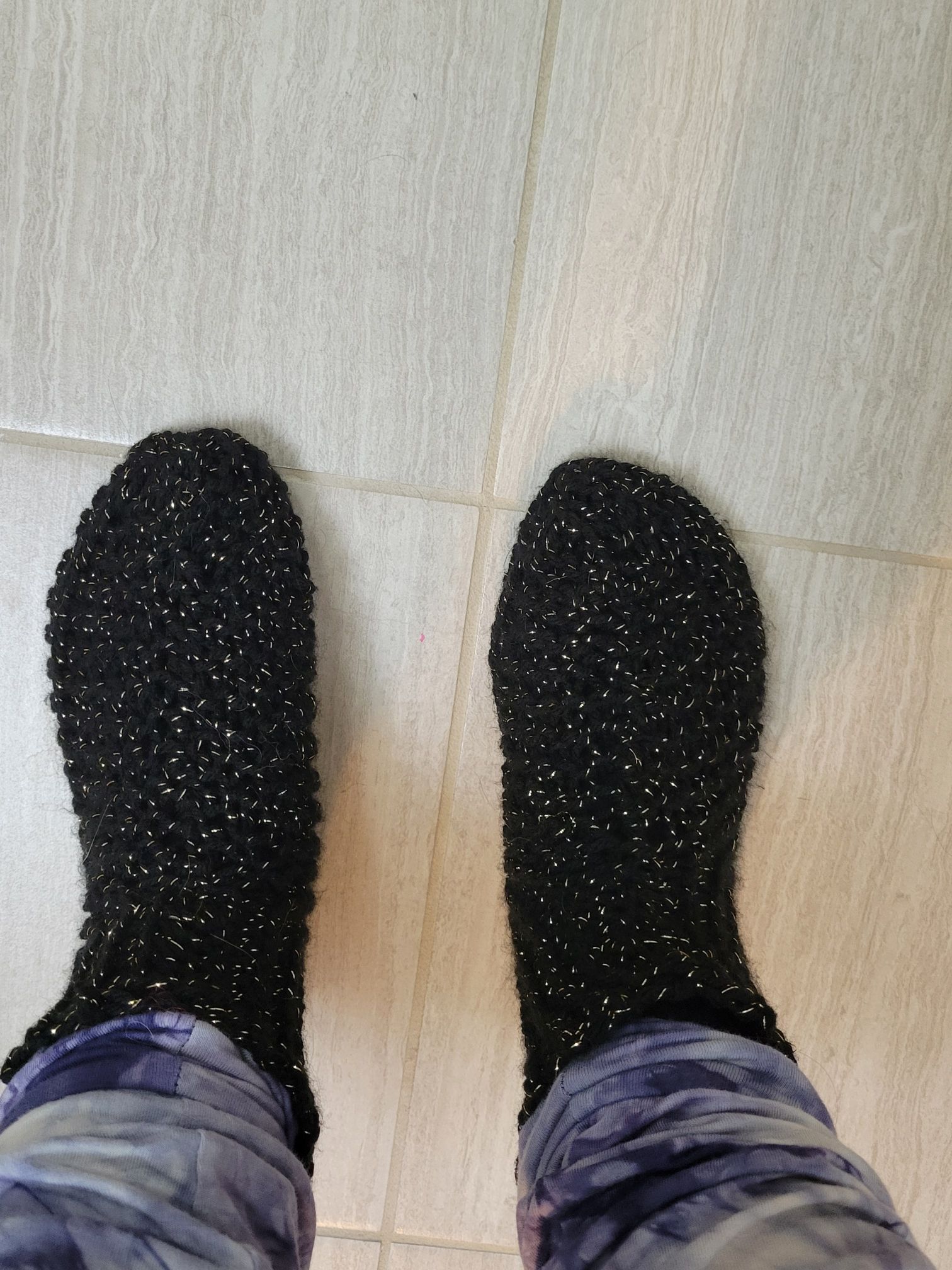
But life is too short to knit something I don’t like, so I made the decision to unravel the work I’d struggled through thus far and try something else. I elected instead to knit a pair of slippers from Mary Maxim, another Canadian big-box craft company with an expansive library of digitized vintage patterns.

The Mary Maxim slippers were a breath of fresh air, a simple bootie knit flat in garter stitch from the toe up, and sewn together in a matter of hours. The pattern called for two strands of worsted held together, but I just used a single strand because I liked the look and feel better.

For both these patterns, I’m starting to notice more similarities to how patterns are written today. Instructions are provided for more than one clothing size, and they finally made the switch to US and metric needles. Begone, backwards UK needle sizes!
I almost gave up on the series after being dormant for so long, but I am cranked (to borrow some 50s slang) to be able to finish this installment and be moving on to a new decade.
Oh my goodness but you are thorough! So interesting to read the informati