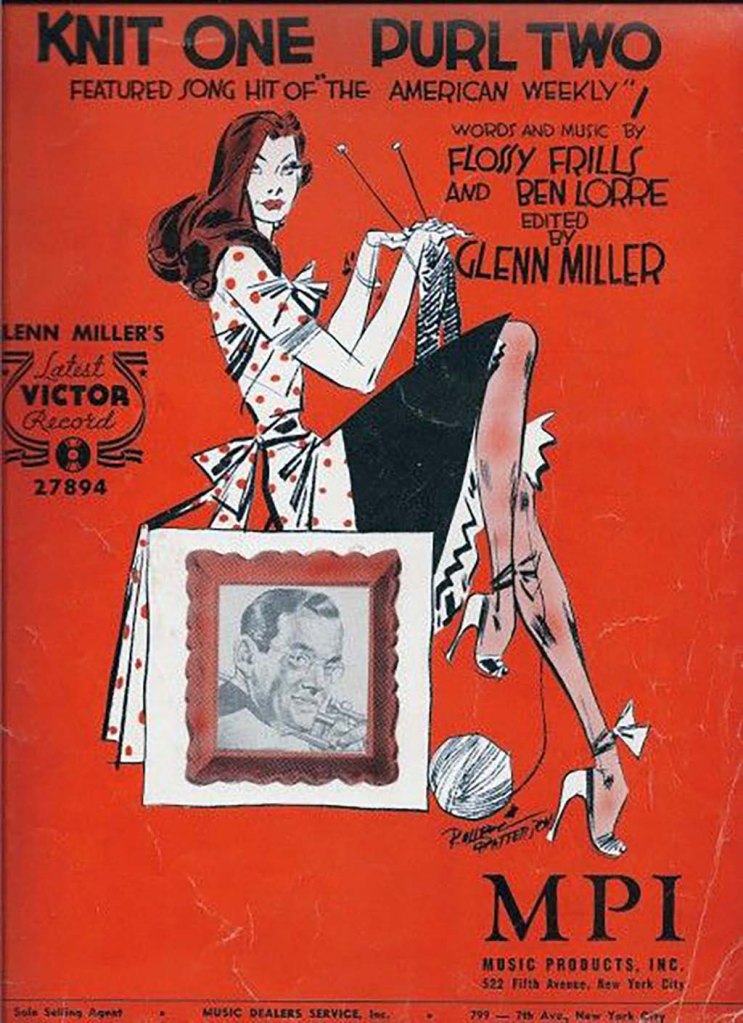
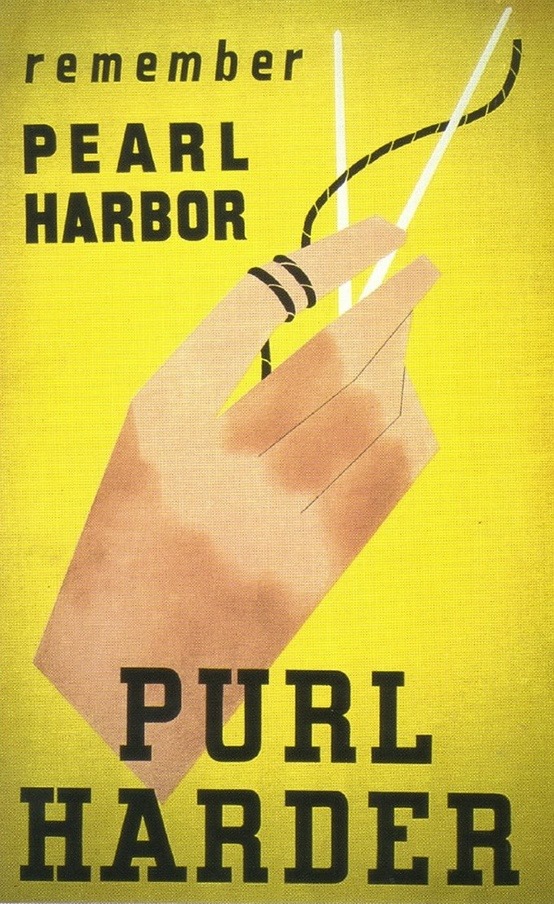
During World War II, knitting needles became known as the weapon of the homefront.
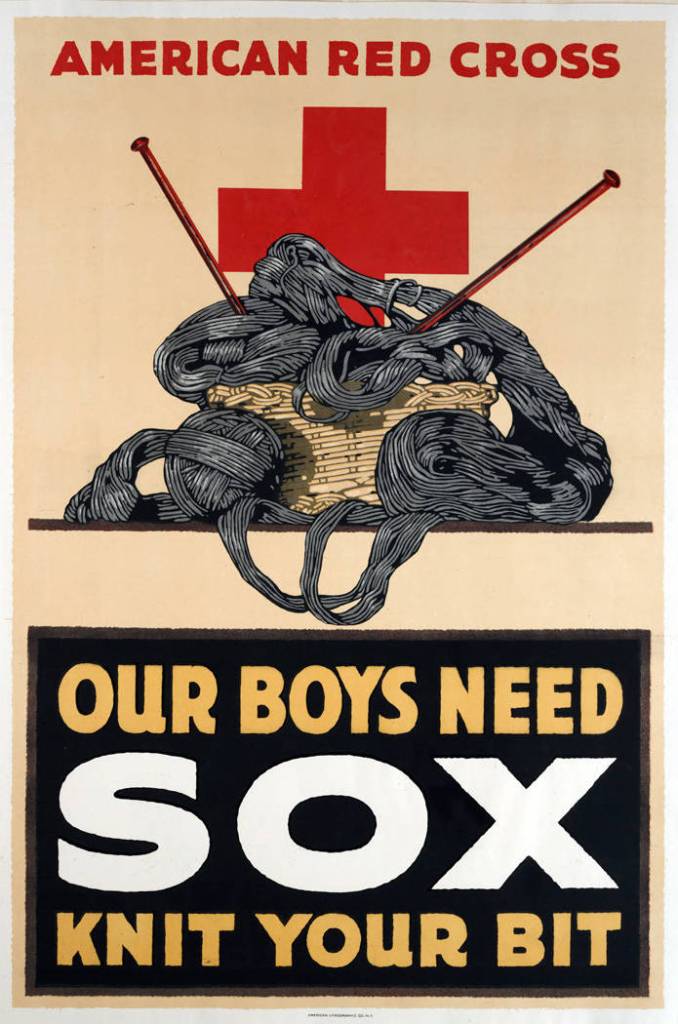
The craft provided an outlet for the grief and uncertainty of war and a tangible way to help the soldiers fighting overseas by knitting sweaters, blankets, headgear, and especially socks for all branches of service. “Knit your bit” became the rallying cry. According to the Canadian War Museum, an estimated 750,000 Canadian women knit more than 50 million garments for the Red Cross.
Knitting wasn’t just for soldier and homefront morale either. In fact, knitting was also a tool for espionage. What might look like an inconspicuous old lady knitting at her window by a train station in Belgium was actually a spy, using her yarn and needles to send coded messages. Knitting stitches in Morse Code or intentionally dropping stitches to mark the movement of enemy trains.
Phyllis Latour Doyle was a 21-year-old agent for Britain in occupied Normandy, who would encode messages on a piece of silk to be transmitted in Morse Code on hidden machines. “I always carried knitting,” she told New Zealand’s Army News magazine in 2009. “I wrapped the piece of silk around a knitting needle and put it in a flat shoe lace which I used to tie my hair up.” Doyle lived a long, incredible life, having passed away only recently in October 2023 at 102.
I found the book I used for this entry at the Old Strathcona Antique Mall in Edmonton, part of a three-in-one set that also included knits for the home and for children. Although with seven pages missing from the beginning of the book, it’s hard to figure out who the publishers were. It’s very generic — other wartime pattern books I’ve found were published directly by yarn manufacturers like Patons, Monarch, and Lux, and therefore suggest their own yarns for each pattern. This book, however, has no obvious branding to speak of.

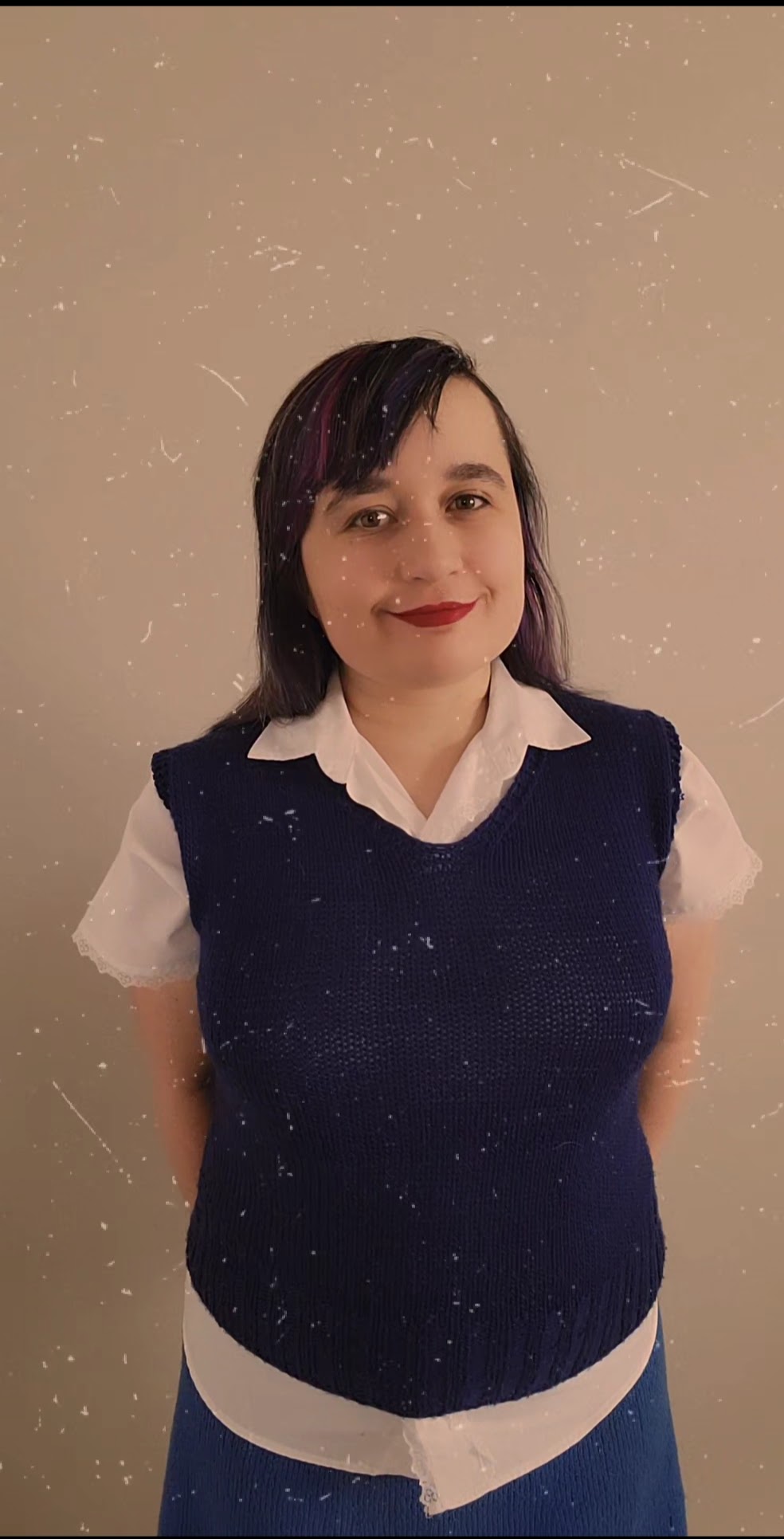
For this installment, I decided to knit a V-neck sweater vest in navy blue DK weight yarn (also called “Scotch Fingering” back then). The vest was knit flat in two panels, each with a garter stitch border where the sides would be seamed together, and basic neck shaping also in garter stitch.
I found it interesting that the instructions didn’t have me picking up stitches along the neck or armholes for edging, it was all done within the pattern. Which makes sense given that wartime patterns like this were written for even the most novice knitter to follow and churn out finished garments quickly.
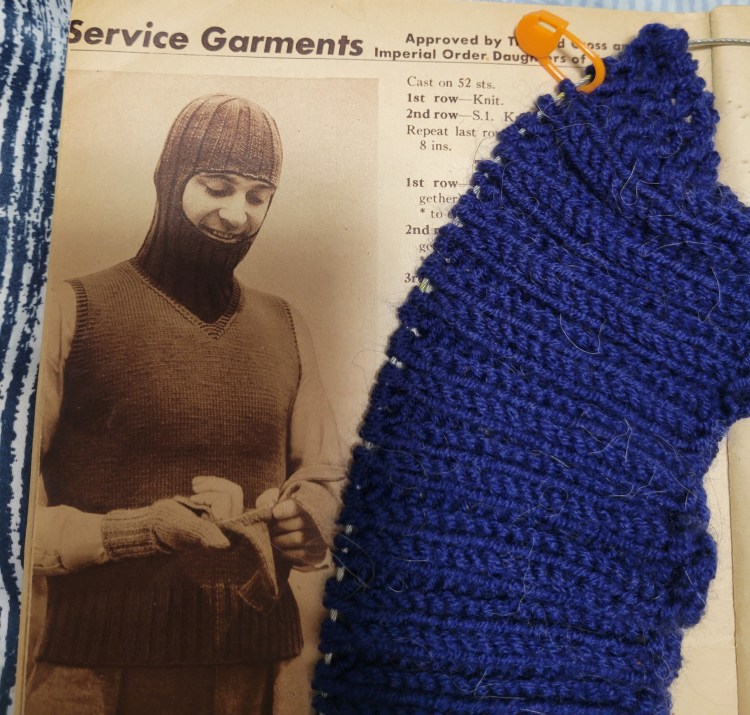
Knitting patterns for soldiers followed very strict uniform guidelines. The only acceptable colours were black, grey, khaki, and navy blue (or aviation blue for Air Force).

Furthermore, every pattern offered a very limited size range in its instructions. Although this seems to have been the norm even before the war, as the 1937 Monarch book I used for my first entry in this series had only one size offering for each pattern. Today, designers will include instructions for sizes anywhere from XS up to 5XL in the same pattern — with each number separated by a comma or parentheses. Knitters of yesteryear had to do a lot more math themselves.
I once again encountered the UK needle sizes that had confounded me before with their backwards numbering mechanism, but at least this time I recognized it right away. I’ll be curious to see when the standards switch over to US and metric sizes, as I’m already tired of looking up the conversions.
The resulting vest is quite nice, providing an air of professionalism and warmth.
In the next entry of A Stitch in Time, I’ll be looking at the impact that new synthetic fibres had on the knitting world in the 1950s.
I love knitting history. Homefront knitters were important.