
Clover lawns are very much in vogue right now.
In addition to being tokens of luck, clover is very hardy, plush, and attractive — to people and pollinators alike. It requires virtually no maintenance, needing minimal mowing and zero fertilizer, unlike standard-issue grass lawns; hence why it seems people are ditching their blue grass for white clover en masse. Including us!
According to data from Google Trends, clover lawns received a massive spike in popularity at the start of 2023. In fact, when we decided to get started on our own clover project this past May, every single hardware and garden store in Leduc was completely sold out of clover seed. I had to resort to ordering my seeds online if I had any hope of clover-izing the backyard this year.

From the end of May when our seeds finally arrived to early July when the 2-kilogram bag ran out, my semi-daily routine was as follows:
- Aggressively rake the lawn — this helps aerate the soil and pull up any dead grass;
- Spread the clover seed — I used a seed spreader occasionally for this, but I mostly ended up sprinkling the seed by hand, a fistful at a time;
- Water heavily — if there was no rain in the immediate forecast, I would take a few laps around the yard with the hose or put on the sprinkler. This is only really necessary in the early stages though as once clover germinates it doesn’t need any extra water, and in fact, seems to retain water in the soil naturally;
Overnight, our lawn exploded with dense patches of clover. Its density is one of the unique features of this delightful plant that was once considered an invasive and unwanted weed. Clover will grow in clusters, making it harder for other plant life like grass and dandelions to have room to grow, eventually overtaking the soil. Right now, the yard is a mix of grass and clover, and I anticipate the ratio will shift more towards clover with each growing season.
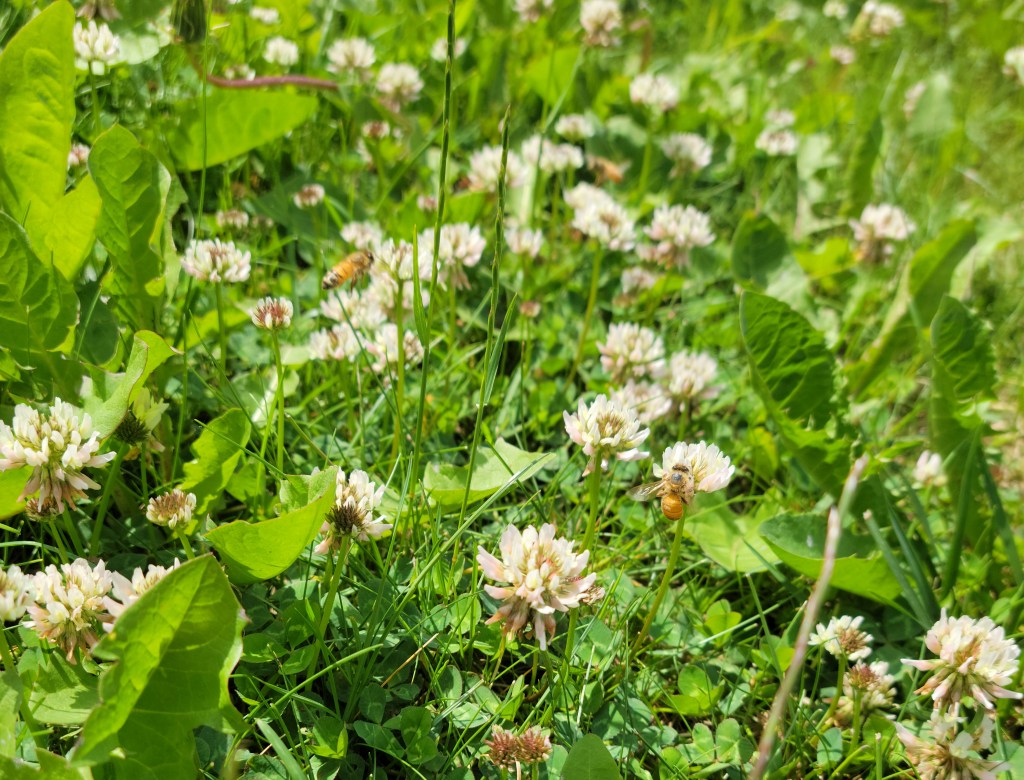
As the white clover flowers come in, many a pollinator has flocked to our yard as well. I am very excited by the blossoming native biodiversity beyond our back deck, and to learn about the creatures that inhabit this little world — I’ve been using Google Lens on my phone to ID the creatures and plants that I find, it’s like catching real-life Pokemon. I’ve “caught” mostly honeybees, some butterflies, and a very pretty Virginia Ctenucha moth so far.
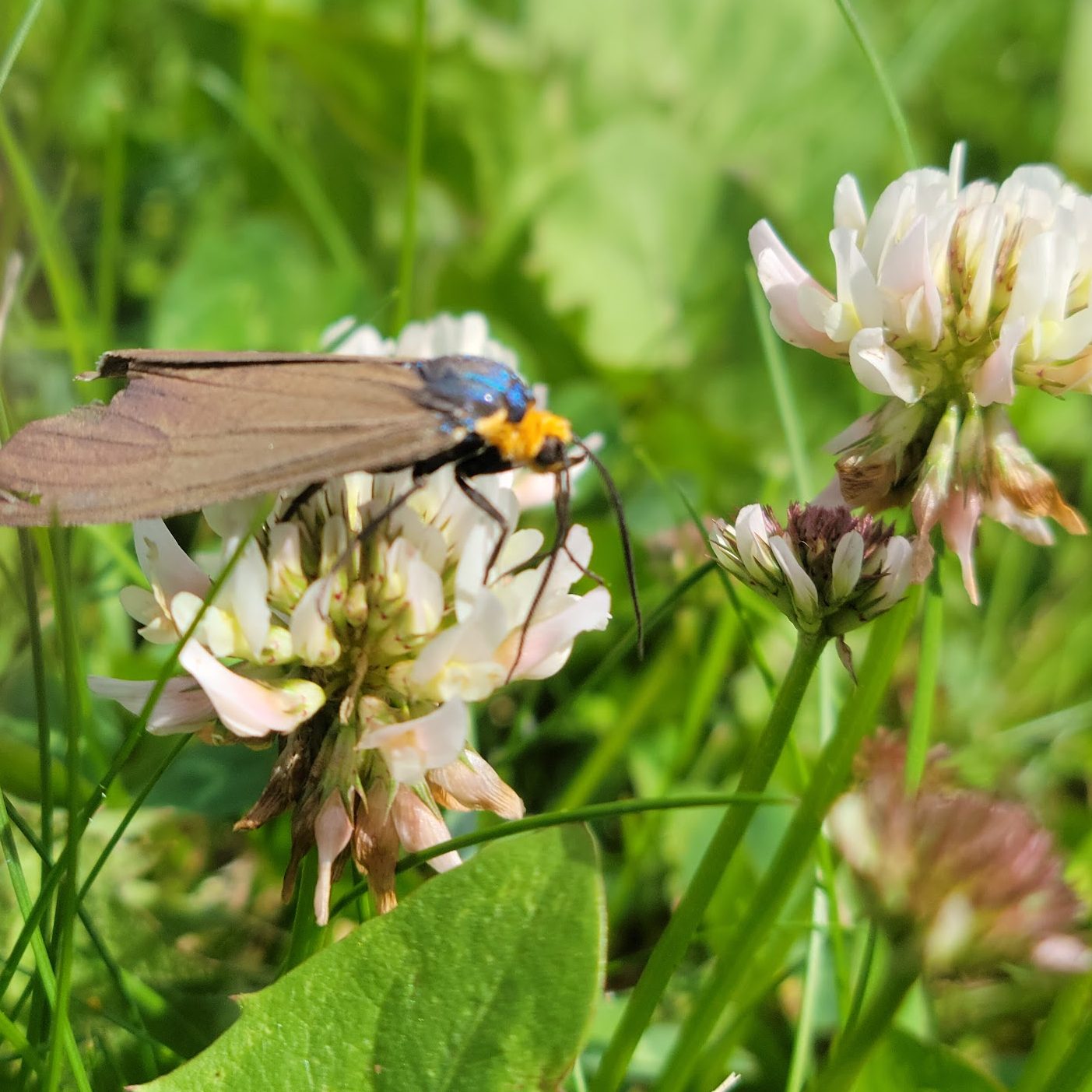
I haven’t found a four-leaf clover yet, but I feel very lucky indeed.
This is amazing information, Centaine. You have done much research and physical labor to see your results.
So nice to have a little bit of country in the city! I love it and it is so soft it makes you want to roll in it. Awesome !