
I feel like the world is really sleeping on Denmark as a vacation destination.
According to a survey by Statista that ranked 15 European countries by their international tourist numbers in 2019 and 2020, Denmark placed 12th, narrowly beating out only Croatia, Romania, and Portugal.
Perhaps its fringe status comes from the fact that, anecdotally, non-Europeans don’t seem to be familiar with Denmark at all. I say this because almost every time we told friends and family we were going to Copenhagen for our vacation, we’d be met with cries of “free drugs!” and “red light district!” clearly confusing Copenhagen and Amsterdam — which is not only the wrong city, but the wrong country altogether, so they’d be countered with a free geography lesson.
Copenhagen is instead the land of fairytales, as it’s the birthplace of Hans Christian Andersen, author of stories like The Little Mermaid, The Ugly Duckling, and The Snow Queen (upon which Disney’s Frozen is loosely based). In fact, one of the city’s landmarks is a bronze statue of the Little Mermaid near the Langelinie promenade.
Andersen’s influence can also be felt at Tivoli Gardens, a breathtaking inner-city theme park in Copenhagen that was built in 1843 and was Walt Disney’s inspiration to build Disneyland. One of the rides, The Flying Toy Chest, is an animatronic dark ride that takes you through 35 different vignettes from Andersen’s stories, it reminded me a lot of Peter Pan’s Flight at the Disney parks. Once again, Denmark’s peacefulness fed into the vibe at Tivoli, as we wandered through lush greenery and my husband made friends with the local wildlife.
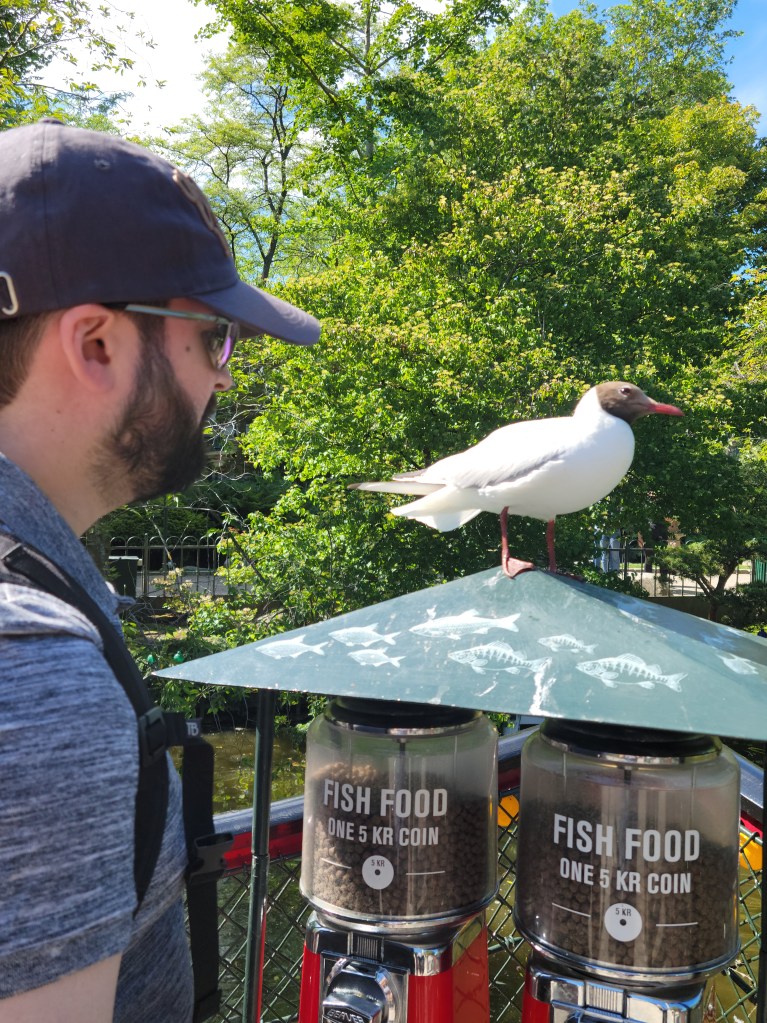
Meanwhile, I fended off attacks from giant cotton candy.

Having been settled in the 11th Century, Copenhagen has a rich history that we were thrilled to take in. So many beautiful historic buildings are shells for mundane things like shops and apartments, the cobblestones on their streets are older than our country. And, being a monarchy, Denmark has several castles in its capital.

We visited Rosenborg Castle, built in 1606 as a summer house for the family of King Christian IV, now a museum and home of the crown jewels. Each room was a fascinating and well-preserved glimpse into the opulence of the era, with ornately painted ceilings, gold-and-ebony writing desks, and even a 13-foot-tall custom-built cabinet that played music – it still works today with the original mechanisms from 1757, and we got to hear it play.
The eeriest room in the castle was definitely King Christian IV’s bedroom. Not only is it the room where he lay dying from cannon fire, but his bloodied clothes are on display. It’s quite early on in the tour as well, giving you a general sense of unease as you proceed through a dead man’s house that’s almost assuredly haunted.
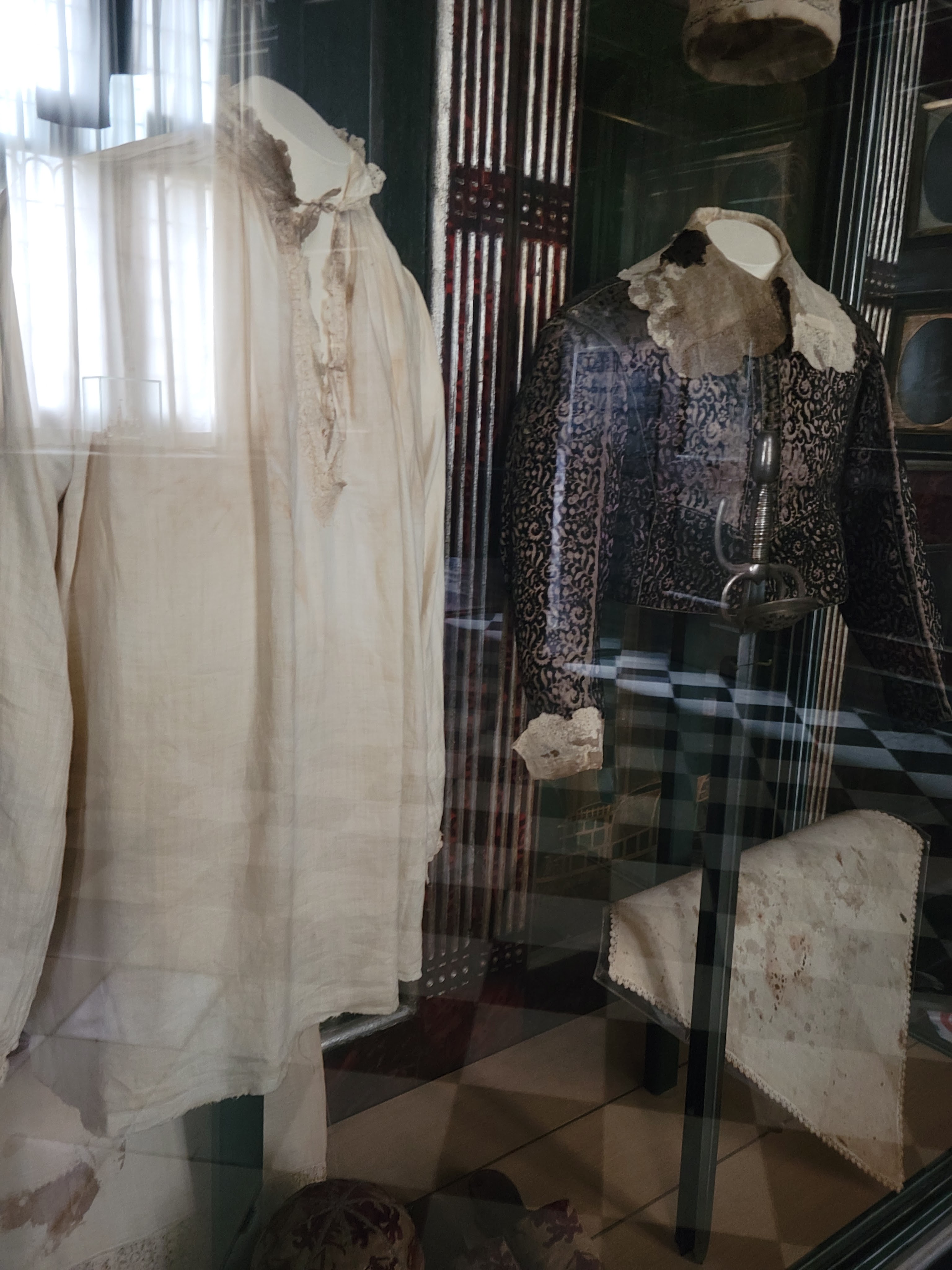
Spooky vibes aside, it was one of my highlights of the trip – you just don’t see castles like that in Canada. The Rosenborg Castle’s website includes a free virtual 3D tour of the building, so you too can partake from home.
My husband’s favourite was the Danish War Museum – a surprise to absolutely nobody who knows him. He was eager to see the artillery, a huge fleet of cannons dating back to the 1100s.

The museum had war artifacts from all over history, from medieval knights to the Afghanistan War, and at the very back sat three empty display cases at the ready, acknowledging the ever-presence of war in human history.
Even though Copenhagen doesn’t pull in as many tourists as other European cities, there were a couple of famous landmarks that felt considerably more touristy than others: Strøget and Nyhavn.

Strøget is a pedestrian-friendly shopping district in the very centre of Copenhagen (the Internet tells me it’s car-free, which is only partially true as we saw many a driver trying to weave their way down the narrow side streets). We went with the hope of some unique shopping, but it was almost exclusively luxury brands like Burberry and Hermes. There’s a surprisingly large presence of luxury stores throughout Copenhagen, but Strøget had the most by far. We likely would have stayed for dinner if we didn’t get caught in the pouring rain that evening.
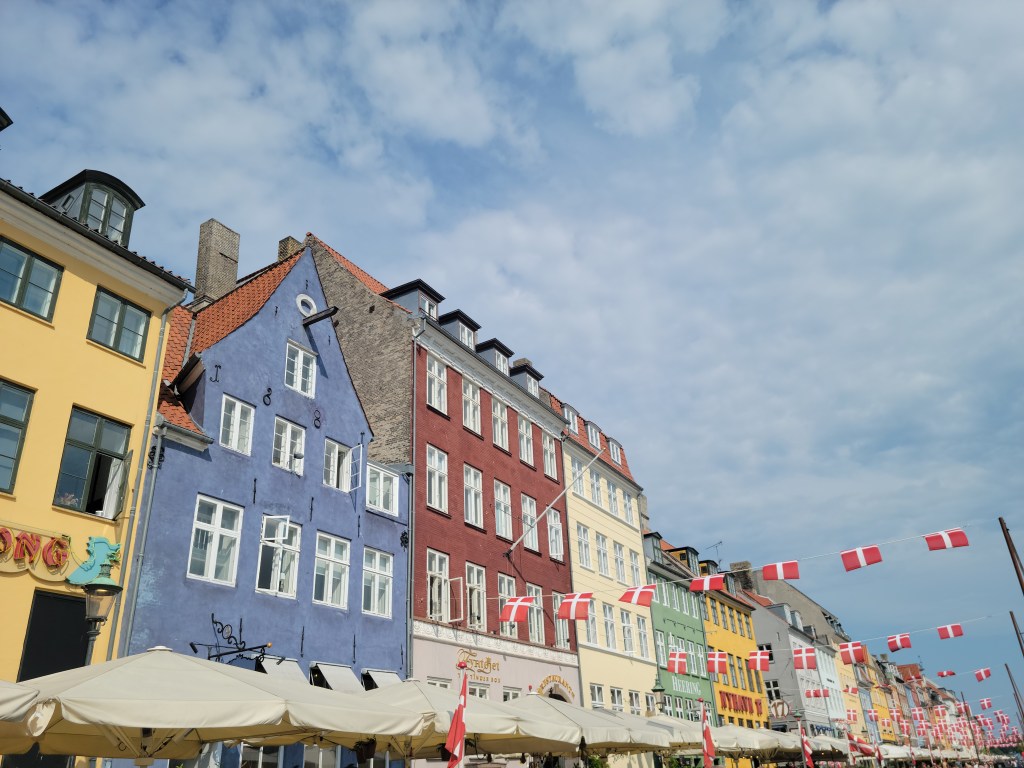
Nyhavn is a series of colourful 18th Century warehouses by the harbour that have been repurposed into hotels and restaurants. We had a lovely dinner there on our last day, but it was very hot and crowded with tourists. Ironically, we had originally booked to stay at one of the Nyhavn hotels for our begotten 2020 honeymoon, but sometimes things happen for a reason, and I’m glad we booked at the apartment instead.
When looking at other travel blogs and videos in anticipation of our 10-day trip, I thought it interesting that so many folks seemed to be coming to Copenhagen for only a weekend at most. Of course, it could be because they were mostly coming from elsewhere in Europe, where it’s easy to take a brief jaunt to another country for a day or two.
Case in point, we went to Sweden for a day.
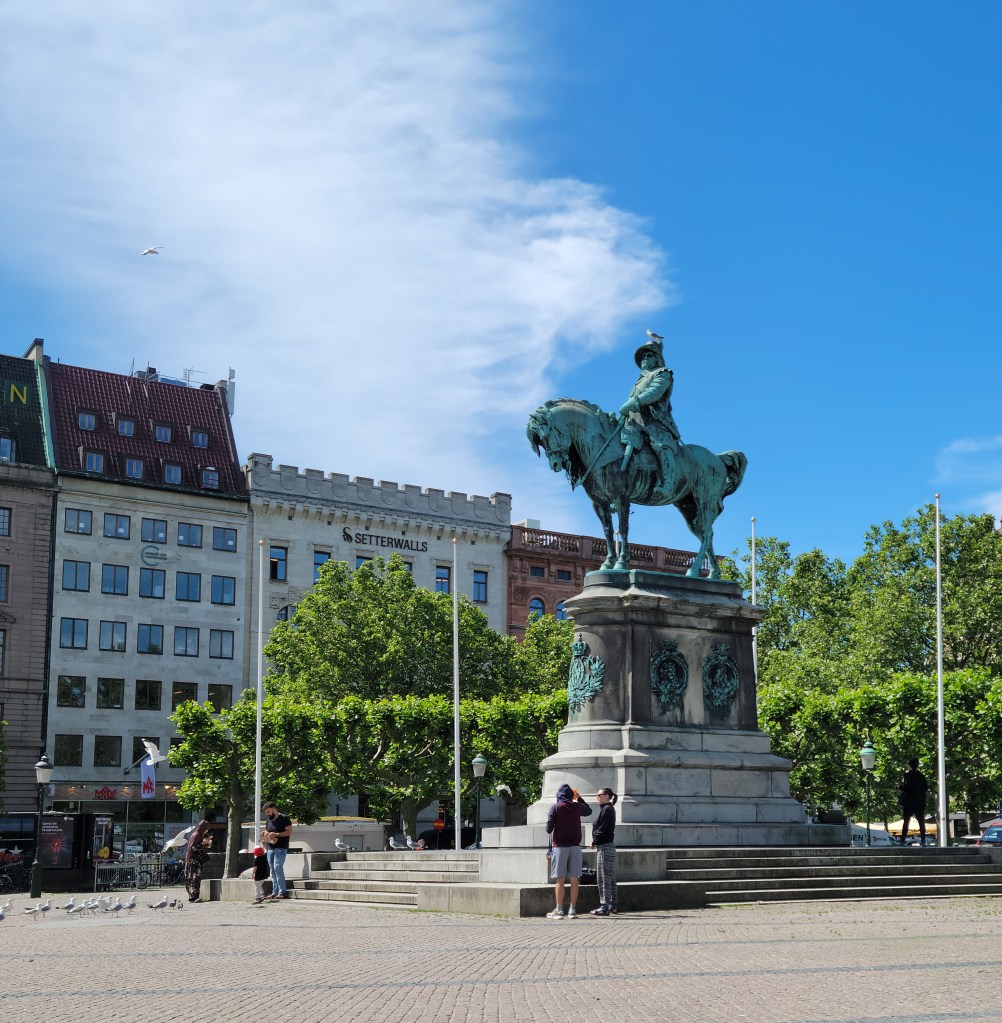
Copenhagen is connected to Malmö, Sweden by a five-mile-long rail bridge (the longest in Europe), and it takes only 25 minutes by train to enter a whole other country. We wandered the cobblestone streets to different shopping squares, got some nice shoes at Ecco and I got yet more yarn from a boutique shop. We also ventured into a comic book shop that had a full-scale Tardis from Doctor Who, which overjoyed me.

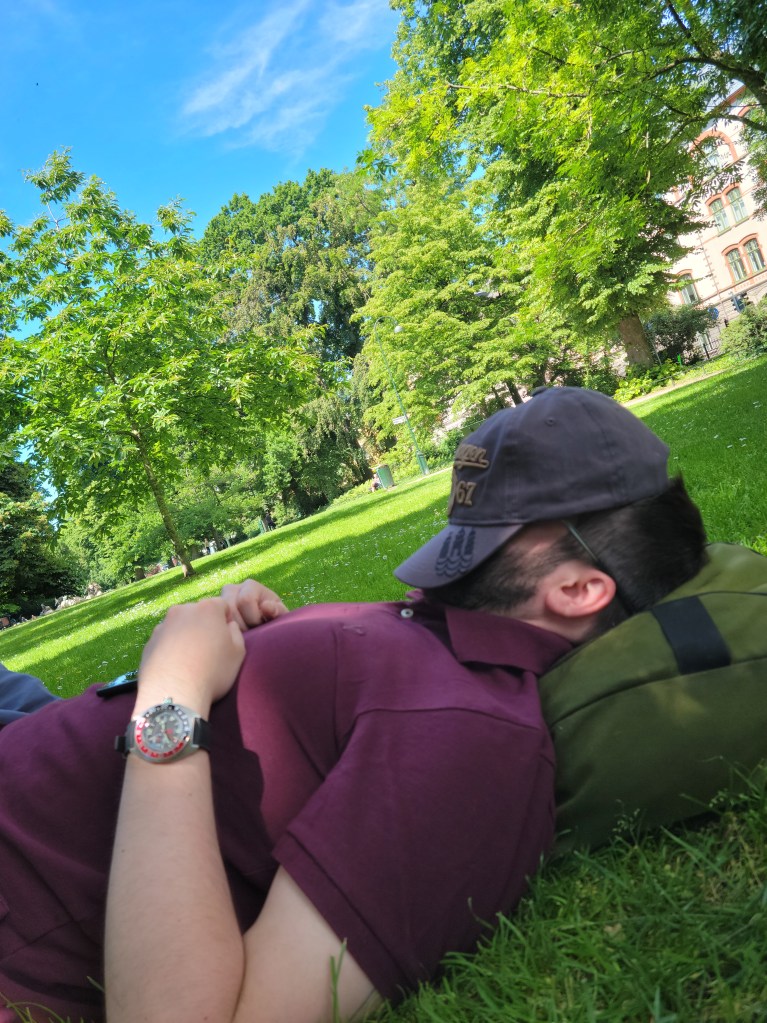
After a walk through the beautiful Kungsparken (King’s Park) on our way back to the train station, we were back in our apartment before dinner.
The day after that, we went on another train to Roskilde, a city west of Copenhagen, to see the Viking Ship Museum. The museum was so cool, with functional recreations of sailing ships from the Viking Age that they build onsite, as well as the original artifacts. It never occurred to me how massive these ships had to be; it was a marvel to see up close.
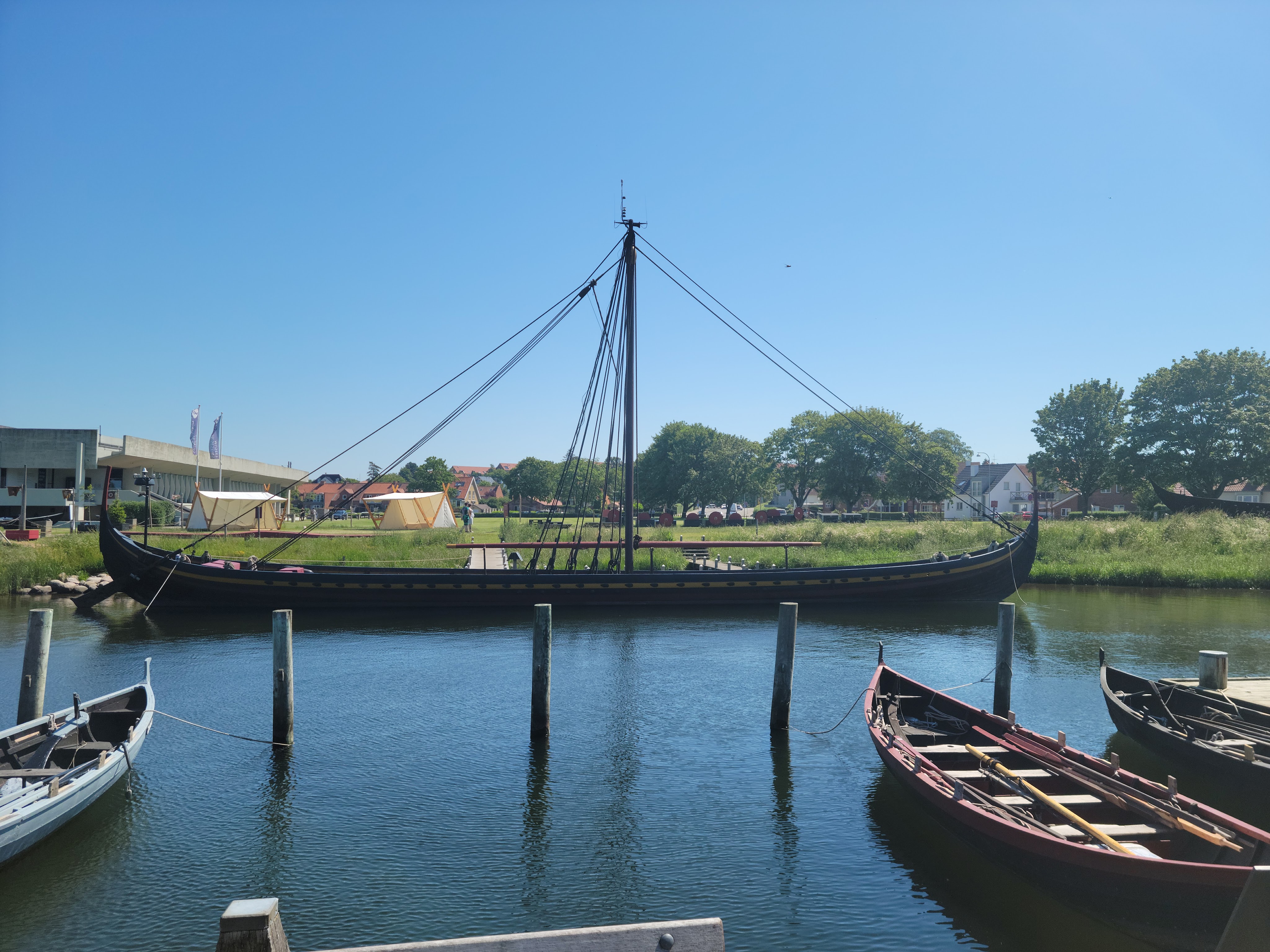
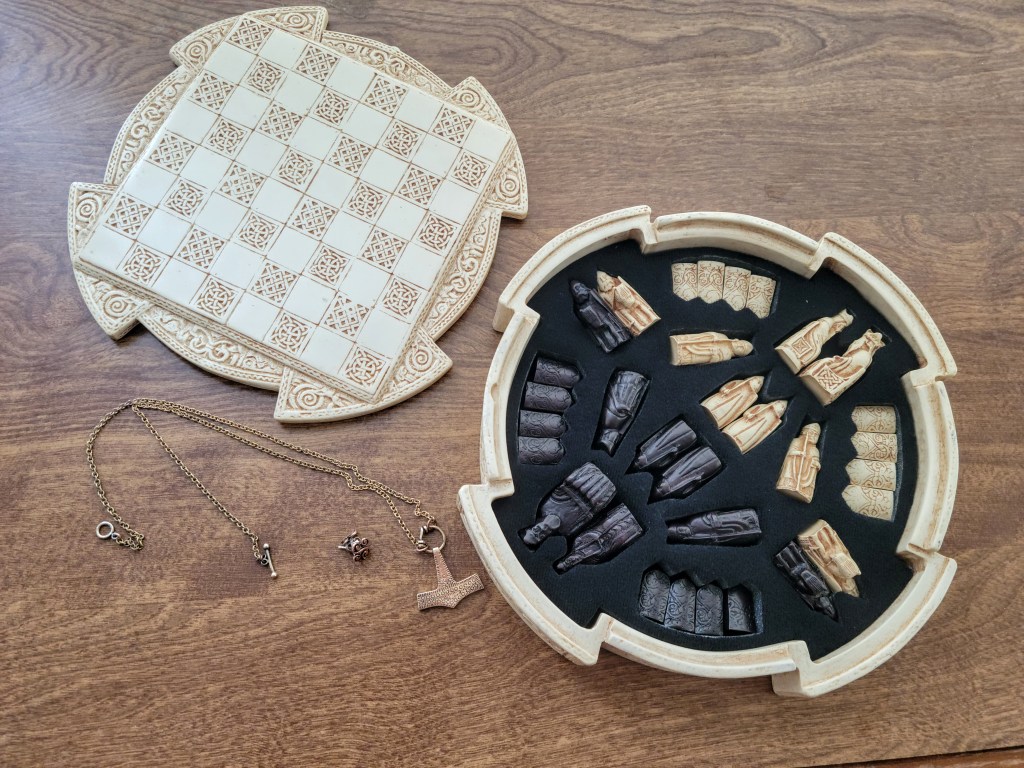
The museum hosts sailing tours in its Viking ship replicas around the harbour. Sadly, we couldn’t get tickets (you could say we… missed the boat) but it was neat to watch groups push off into the sea. They also had a pretty cool gift shop, with recreations of Viking jewelry, games, and apparel. I took home a necklace modeled after Thor’s hammer (a symbol of protection in Norse mythos), and stud earrings in the shape of a four-leaf clover, and my husband bought a gorgeous Viking chess set (Vikings loved games).
In hindsight, we should have spaced our long-distance sightseeing a bit further apart as we were dead tired for the last few days of our vacation. I do think that 10 days is more than enough time to see everything you want to see in Copenhagen and have a bit of rest in between.
Denmark really is a hidden gem of a country. Just wait until I tell you about the food in my next installment! 😉
Once again, I am enthralled by your report of Copenhagen. How did you chose this country? Consider sending your articles to their government tourist bureau – you are selling the country.